If one person in an AI workshop needs help finding the prompt box and another is building an application around it, “follow along” leaves a few things unspecified. You can give them different amounts of help while still expecting both to check whether an answer is supported.
For a fictional exercise, suppose a community group’s event notice says registration closes Friday at noon. An AI-generated reminder says Friday at 5 p.m. Is the reminder ready to send? What would you change, and why?
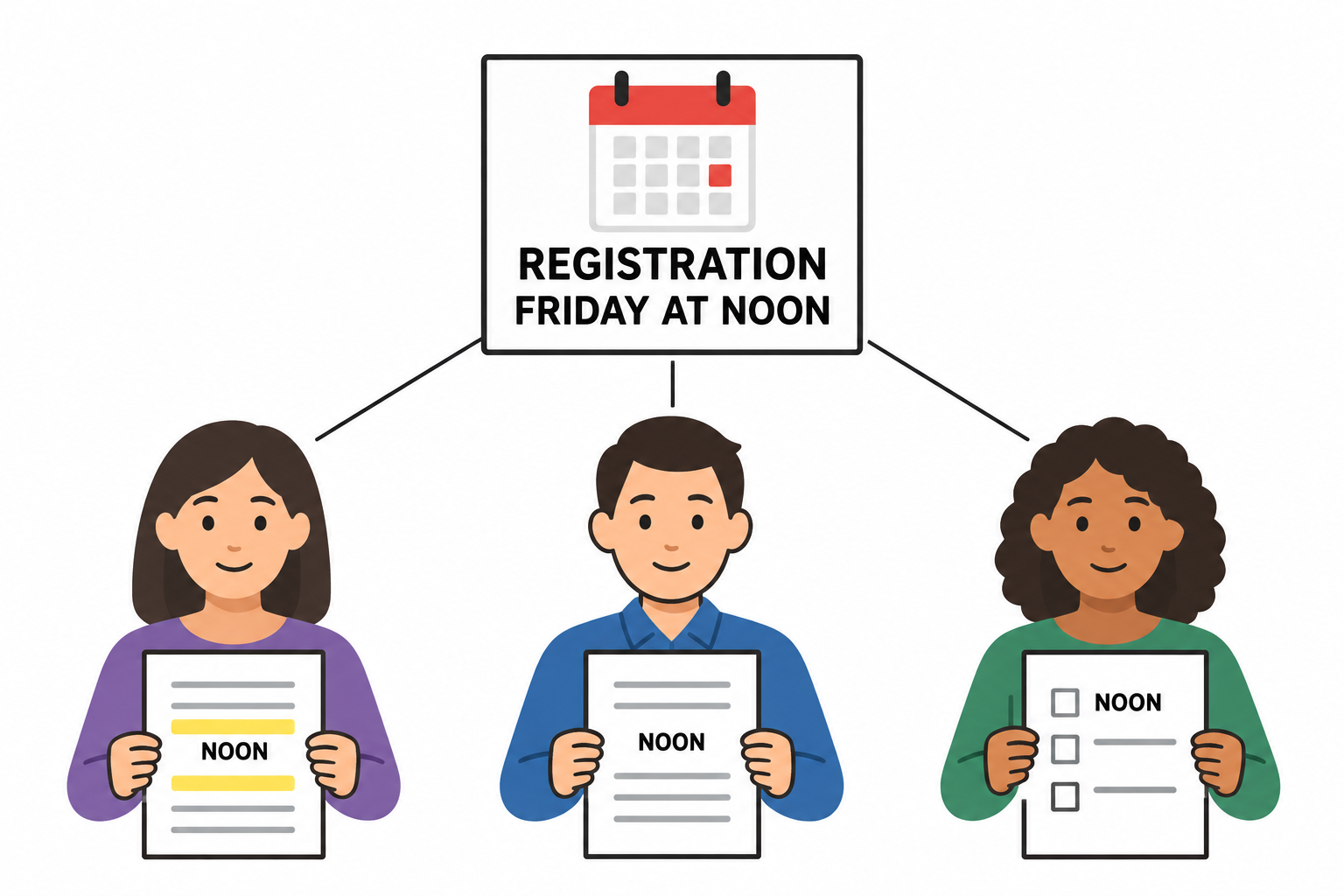
For someone just starting, put the notice and reminder side by side and point to the two deadline sentences. Ask what differs and which document supplies the deadline. Then have them correct the reminder. They can work through the decision without also having to discover where everything is.
For someone ready to work independently, provide the same documents without pointing out the discrepancy. Ask them to identify the claims that need checking, find the supporting text, and explain any changes. The task still ends with a reminder that agrees with the notice; more of the review now belongs to the participant.
For someone ready to examine the process, add another question: how would you catch this error in the next reminder? They might propose a checklist or an automated comparison. Have them explain what their check would miss. Matching the reminder to an outdated notice could produce a very consistent mistake.
In all three routes, 5 p.m. is wrong. Experience changes how much help someone receives and how much of the process they examine; it doesn’t change the deadline. An elaborate prompt doesn’t get extra credit for moving it five hours.
I’d make the routes available without assigning people permanent labels. Someone who writes software may need help evaluating the source, while someone new to AI may already know exactly which mistakes cause trouble in this work. Familiarity with the tool and knowledge of the subject are different starting points. A participant might also need the guided route for one task and the independent route for another.
The help matters when you assess the result. Spotting a discrepancy after the two sentences have been highlighted shows that someone can compare them and explain the correction; it doesn’t yet show that they can find the discrepancy in a whole document. Ask them to review a fresh example without the highlighting before claiming that second result. Apply the same care to the advanced route: proposing a check doesn’t establish that it catches the error until you try it.
I’d want to see where participants ask for help, which errors they catch, and whether they can explain their decisions before deciding that the different routes work as intended.
Take one exercise from your next workshop and write down the decision everyone should be able to make. Provide a guided route to that decision, then remove some of the guidance for a second route. For an extension, ask participants to design a check and give them another example that exposes its limits. Keep the source and the required answer consistent so you can see what the extra help actually changes.
—jhunterj