Examples of practical work across programming, AI integration, and data architecture, including community responsibilities, independent product development, and current and earlier client engagements.
PROGRAMMING · Community website work · Released
Making an interrupted save recoverable
For the Dayton Hash community website, I led improvements to saves that succeed even when confirmation never reaches the browser. The interface, API, and database work together so users can retry the original request and recover its result.
The problem and my contribution
An interrupted connection can leave someone unsure whether a change was saved. Retrying as a new operation risks making the same change twice. I led work that gives each request an identity, saves related changes together, and retains a receipt for recovery. After signing back in with the original account, the user can explicitly retry that request.
What was verified
Staging tests deliberately interrupted successful responses and verified that retries returned existing receipts without making another change. The work was released to production, with deployment and public-page checks recorded separately. Recovery depends on retaining the original request in the same browser tab.
Related work
I also directed a read-only Google Calendar integration that gives visitors event listings and shareable detail pages while keeping scheduling in the community’s existing calendar. Calendar entries remain separate from historical attendance and statistics.
My role combines webmaster responsibilities, product decisions, and AI-assisted development and verification, building on the existing application and collaborators’ work.
AI INTEGRATION · Independent product · In development
Useful drafts. Deliberate human decisions.
In a job-search application I’m developing, AI helps prepare résumé and cover-letter drafts from the user’s supplied experience. Users review and edit the materials, submit applications themselves, and confirm their status.
The problem and my contribution
The application connects selectable AI providers to a workflow grounded in the candidate’s supplied experience. I implemented provider integration, structured responses, progress reporting, and cancellation. The user can inspect and edit the draft before deciding what to submit; application status changes require their confirmation.
What was verified
Recorded staging checks verified completion and cancellation of the tailoring workflow. Validating the response structure does not establish that every generated statement is true: human review remains essential. The product is still in development, and public registration is not open.
Related work
The project also includes the evolution from standalone storage toward owner-scoped shared storage, with migration and reconciliation procedures. That architecture has restricted staging evidence; public-beta readiness remains a separate milestone.
This is my independent product development through J. Hunter Johnson LLC. AI providers supply the generated language; my work is the surrounding integration, workflow, and controls.
DATA ARCHITECTURE · Community website work · Archive preservation verified
Modernizing without discarding history
For the Miami Valley Orienteering Club, I helped modernize the website while preserving access to historical results. The work separated durable records from presentation, supported gradual migration, and retained established document links.
Before and after
Two homepage views showing the change in presentation. Select either image for a larger view.
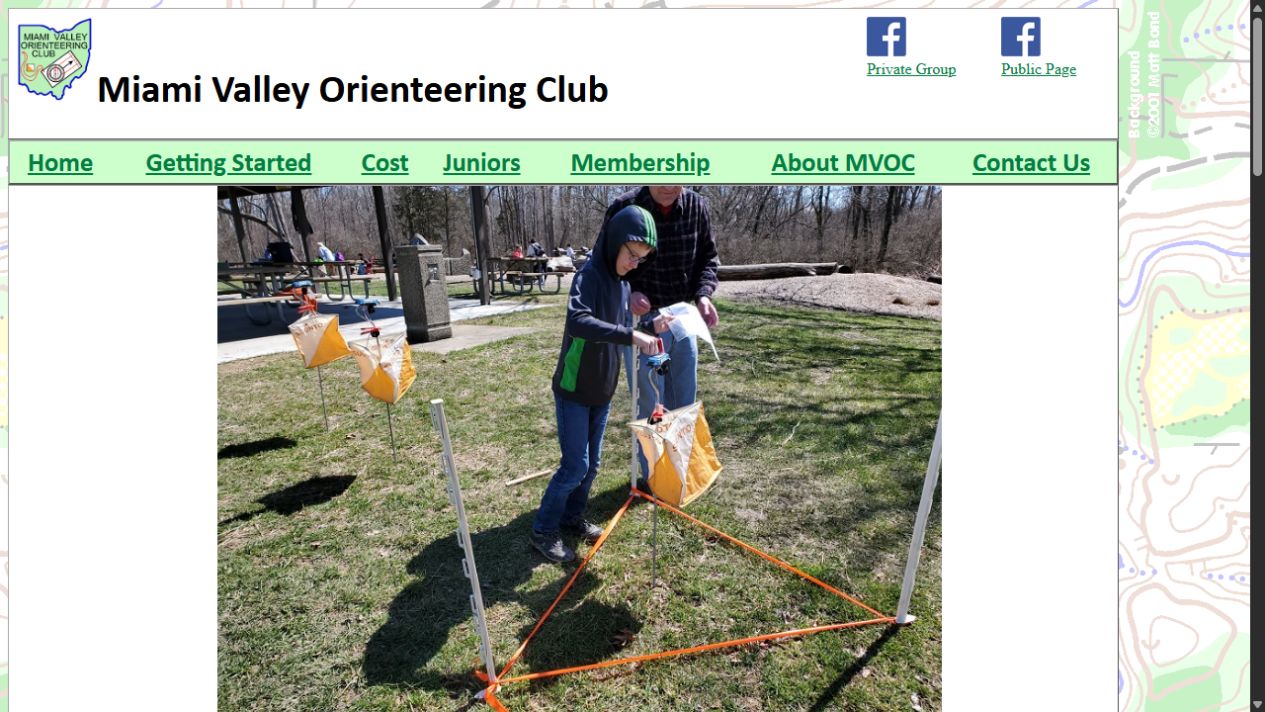
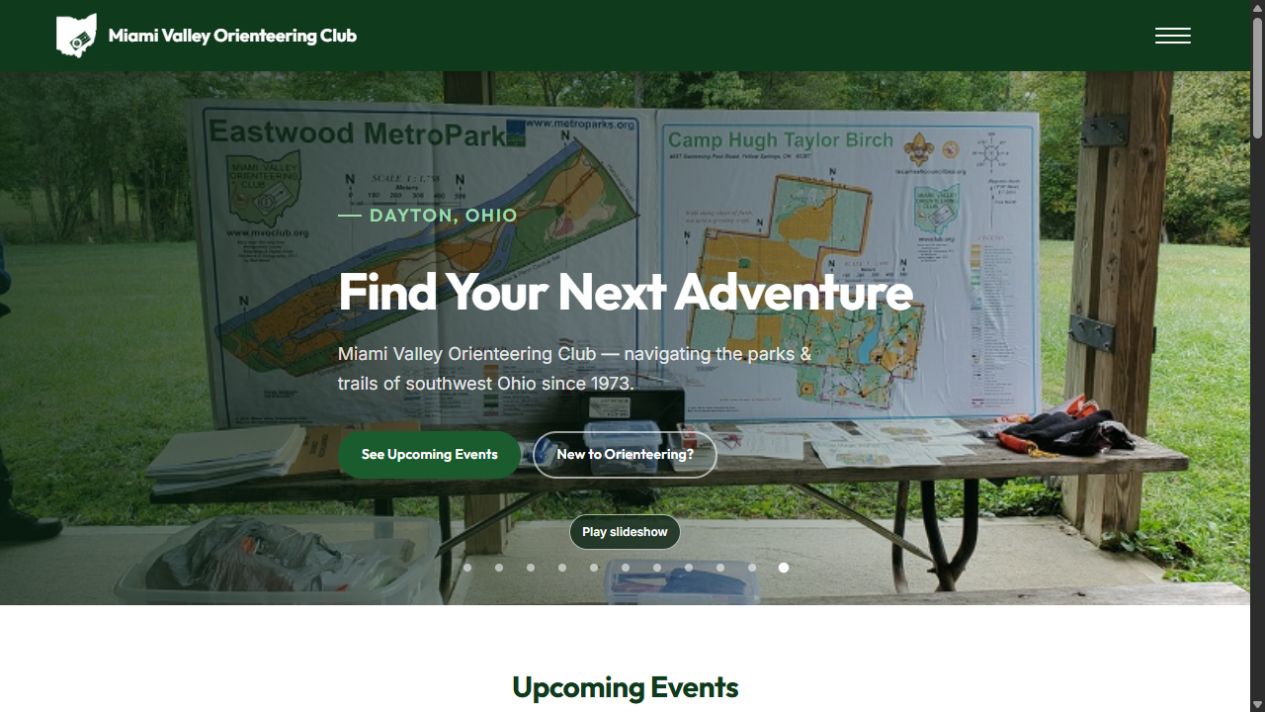
The before image shows the preserved old site. “Explore the old site” opens its November 27, 2025 Internet Archive snapshot, whose content may differ. Both images were captured on September 22, 2026 and are displayed as matching homepage crops.
The problem and my contribution
Historical documents and links remain valuable even when the software around them changes. I separated durable club records and settings from the visual theme, built a resumable importer, and supported a gradual transition that keeps legacy documents accessible. The design gives each component a clear responsibility.
What was verified
Recorded production checks verified the preserved archive and its directory access. Maintenance guidance documents ownership and recovery responsibilities. Archive preservation and migration tooling do not imply that every historical entry has completed its database migration.
Related work
Related usability work addressed navigation, keyboard focus, contrast, and mobile content order, with specific checks and remaining accessibility limitations documented.
This is community webmaster and development work. Club volunteers and earlier maintainers contributed the history and content; WordPress and its plugins provide the underlying platform.
AI training-material development
Client engagement · OpenAI, through Carahsoft
Training-material development for OpenAI, as a contractor through Carahsoft. My role is to help make AI capabilities understandable and useful in the intended working context.
This is current contract work. The deliverables are private, so no client materials, screenshots, or internal results are presented here.
Earlier independent consulting
Reporting across a digital media business
Independent consulting · 2011–2015
For a digital media business, I developed and maintained reporting across revenue, subscriptions, events, web traffic, and community engagement. The work included company and property-level dashboards, drill-down reports, dimensional database changes, and the data feeds behind them.
Much of the work involved the details that determine whether a report is useful: date boundaries, changing targets, inconsistent identifiers, missing feeds, and differences between source and reporting databases. I built data-integrity reports, investigated discrepancies, and adapted reporting as the business’s definitions and systems changed.
This was continuing work on an existing reporting environment, in collaboration with the client’s staff.
Spreadsheet models for game design
Independent consulting · 2012–2013
I used spreadsheets to examine game-design questions, including how a virtual currency could be earned and spent, how achievement rewards affected progression, and how dice pools behaved statistically. The virtual-currency model exposed adjustable parameters so different assumptions could be explored directly.
Earlier data-architecture work
Prior professional experience
Before and alongside this practice, my work has included enterprise data architecture and modernization in commercial and federal settings. At Data Intensity, that included Informatica-to-SSIS migration work and an SSAS proof of value. At LexisNexis, it included master data and cross-market data integration. My federal work has included data modeling, integration, and governance.
These examples describe earlier professional roles, not contracts delivered by J. Hunter Johnson LLC. They are background for the judgment I bring to new projects.
Public development work
My public GitHub profile includes original work and forks. A repository listing alone does not establish authorship of the entire project; contribution history provides the relevant context.