If your application imports records from somewhere else, deleting a record is only half the job; the next import will happily bring it back unless something remembers that you explicitly deleted it. That memory is the part people forget to design, and it’s in conflict with what “delete” is supposed to mean.
For example, a job-search tool pulls postings from a feed every day. A user sees a posting for a role they would never take and deletes it. Tomorrow the feed again lists that posting, the importer finds no matching record, and it creates one. The user deletes it again. By the third day they have stopped trusting the delete button, and probably the importer too.
The fix is not to keep the entire posting; it’s to keep just enough to recognize it. There are at least four states worth separating: discovered (the record is active), archived (hidden but restorable), deleted (the record is gone), and suppressed (the record is gone, and the importer knows not to recreate it).
| State | Record kept | What the importer does | What the user can do |
|---|---|---|---|
| Discovered | Full record | Updates it | Archive or delete |
| Archived | Full record, hidden | Updates it, stays hidden | Restore or delete |
| Deleted and suppressed | Fingerprint and a short label | Skips it | Allow it again |
| Allowed again | Full record | Treats it as new | Archive or delete |
Archive and delete answer different questions. Archive means “not now, but I might want the history,” so the full record stays and the importer keeps it current. Delete means “I don’t want this in my data,” so the full record goes. Suppression is what makes delete stick without keeping the thing the user asked you to remove.
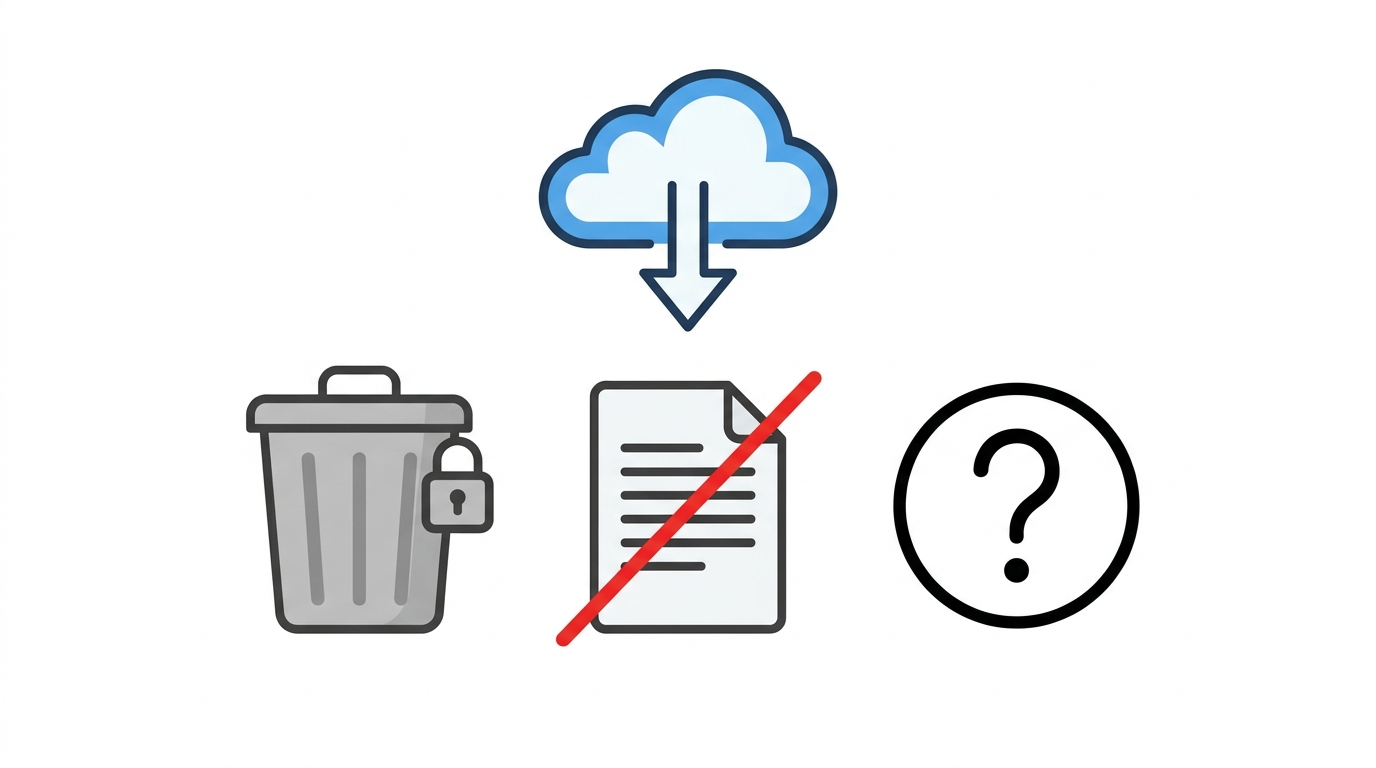
The suppression record should be small. A fingerprint of the posting’s URL is usually enough for the importer to recognize it, and a short label (company and title, say) lets you show the user what they suppressed without storing the whole posting. Keep in mind that a hash of something predictable isn’t automatically anonymous, since anyone who can guess the URL can compute the same hash. Treat it as personal data that happens to be small, not as data that stopped being personal.
The user also needs a way to change their mind. If the only record of a deletion is invisible, a posting they deleted by accident, or one that was relisted with a better salary, is gone for good. A list of suppressed items with an “allow again” button costs very little and makes the delete safe to use. Allowing it again should create a new record on the next import rather than resurrect the old one, because the old one is, as requested, gone.
Finally, decide how long the suppression lives. Forever is simple but means the list only grows, and a posting that disappears for a year and returns may deserve a fresh look. A fixed period (or until the posting has gone missing from the feed for a while) bounds the memory. Whatever you choose, tell the user, and delete the suppression list when they delete their data.
To start, find where your importer decides whether a record is new, and see what it would do with something the user already deleted.
—jhunterj